Buy tv4.org ?
We are moving the project
tv4.org .
Are you interested in purchasing the domain
tv4.org ?
domain@kv-gmbh.de · 0541-91531010
Buy tv4.org ?
Could the United Nations prevent the First World War?
It is unlikely that the United Nations could have prevented the First World War, as the organization was not established until after the Second World War. The complex web of alliances, militarism, nationalism, and other factors that led to the outbreak of the First World War were deeply rooted in the political landscape of the time. The United Nations' focus on diplomacy, peacekeeping, and conflict resolution may have helped to mitigate some of the tensions that led to the war, but it is unlikely that it could have entirely prevented such a large-scale conflict. **
Could the United Nations have prevented the First World War?
It is unlikely that the United Nations could have prevented the First World War, as the organization was not established until after World War II. The First World War was primarily caused by a complex web of political alliances, militarism, nationalism, and imperialism that had been building for decades. The United Nations' focus on promoting peace and security through diplomacy and conflict resolution may have helped prevent similar conflicts in the future, but it would have been challenging to prevent the specific circumstances that led to the outbreak of the First World War. **


Similar search terms for First Nations
Top-Angebote
Products related to First Nations:
-
Icon Books Inside Qatar: Hidden Stories from One of the Richest Nations on Earth by John McManusAN INTIMATE PORTRAIT OF LIFE IN ONE OF THE WORLD'S RICHEST NATIONS AHEAD OF THE FIFA 2022 WORLD CUPJust 75 years ago, the Gulf nation of Qatar was a backwater, reliant on pearl diving. Today it is a gas-laden parvenu with seemingly limitless wealth and ambition. Skyscrapers, museums and futuristic football stadiums rise out of the desert and Ferraris race through the streets. But in the shadows, migrant workers toil in the heat for risible amounts.Inside Qatar reveals how real people live in this surreal place, a land of both great opportunity and great iniquity. Ahead of Qatar's time in the limelight as host of the 2022 FIFA Men's World Cup, anthropologist John McManus lifts a lid on the hidden worlds of its gilded elite, its spin doctors and thrill seekers, its manual labourers and domestic workers.The sum of their tales is not some exotic cabinet of curiosities. Instead, Inside Qatar opens a window onto the global problems - of unfettered capitalism, growing inequality and climate change - that concern us all.7,95 £*Shipping: 2,99 £Secure redirect to the provider
-
HDMI Capture Card USB Video Recording Adapter For Streaming & Content Creation HDMI Capture Card USB Video Recording Adapter For Streaming & Content CreationTransform your setup into a powerful content studio with this HDMI capture card designed for creators who demand clarity and ease. Whether youre streaming gameplay, recording tutorials, or capturing live events, this compact device delivers smooth,...64,97 $*Shipping: 0,00 $Secure redirect to the provider
-
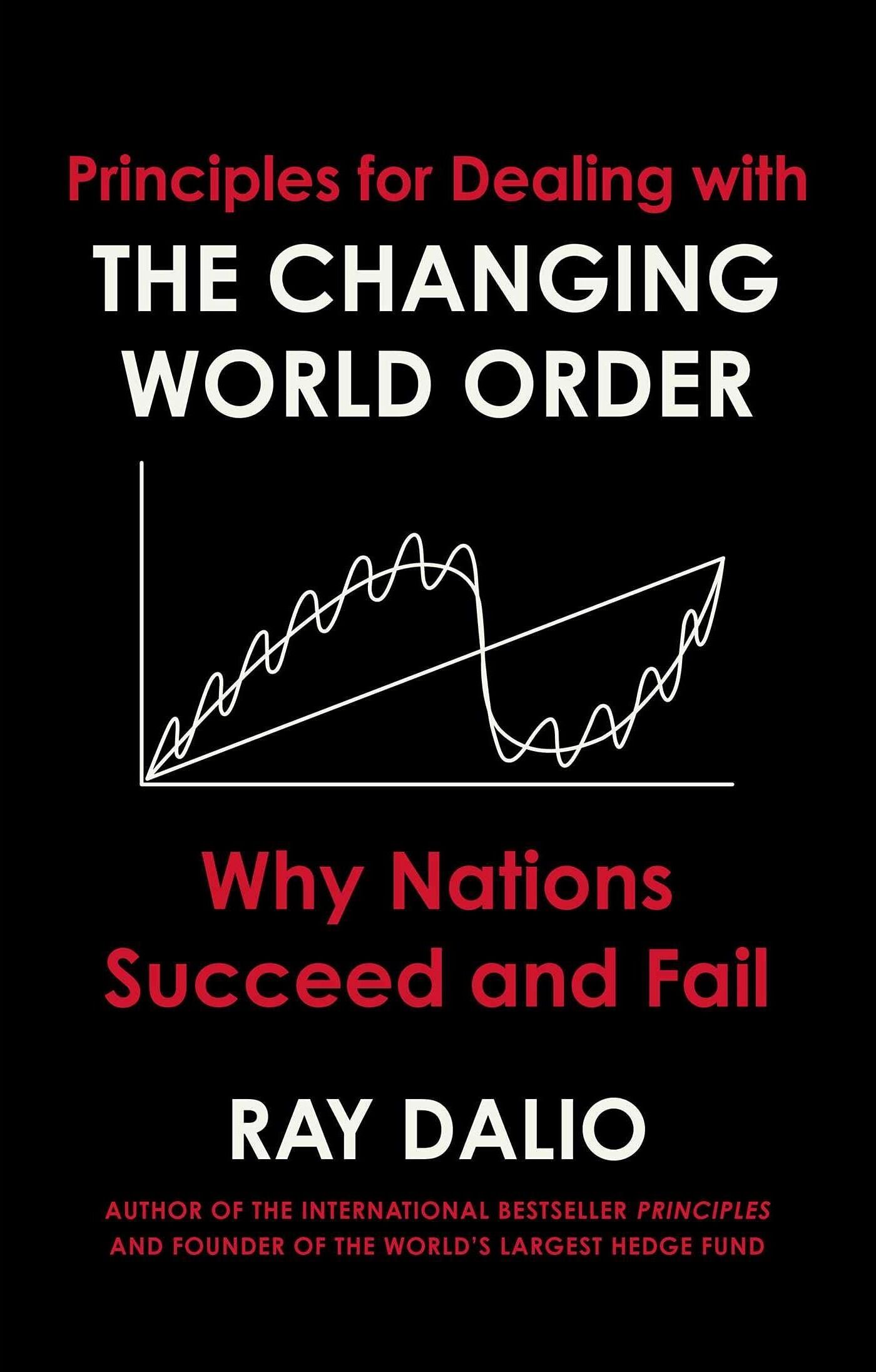
Simon & Schuster UK Principles for Dealing with the Changing World Order: Why Nations Succeed or Fail by Ray DalioFrom legendary investor Ray Dalio, author of the international bestseller Principles, who has spent half a century studying global economies and markets, Principles for Dealing with the Changing World Order examines history’s most turbulent economic and political periods to reveal why the times ahead will likely be radically different from those we’ve experienced in our lifetimes - but similar to those that have happened many times before. A few years ago, Ray Dalio noticed a confluence of political and economic conditions he hadn’t encountered before. They included huge debts and zero or near-zero interest rates that led to massive printing of money in the world’s three major reserve currencies; big political and social conflicts within countries, especially the US, due to the largest wealth, political and values disparities in more than 100 years; and the rising of a world power (China) to challenge the existing world power (US) and the existing world order. The last time that this confluence occurred was between 1930 and 1945. This realisation sent Dalio on a search for the repeating patterns and cause/effect relationships underlying all major changes in wealth and power over the last 500 years. In this remarkable and timely addition to his Principles series, Dalio brings readers along for his study of the major empires - including the Dutch, the British and the American - putting into perspective the 'Big Cycle' that has driven the successes and failures of all the world’s major countries throughout history. Dalio reveals the timeless and universal forces behind these shifts and uses them to look into the future, offering practical principles for positioning oneself for what’s ahead.13,99 £*Shipping: 2,99 £Secure redirect to the provider
-
Principles for Dealing with the Changing World Order: Why Nations Succeed or Fail by Ray Dalio - Non Fiction - Hardback Simon & SchusterPrinciples for Dealing with the Changing World Order examines history’s most turbulent economic and political periods to reveal why the times ahead will likely be radically different from those we’ve experienced in our lifetimes - but similar to those that have happened many times before. A few years ago, Ray Dalio noticed a confluence of political and economic conditions he hadn’t encountered before. They included huge debts and zero or near-zero interest rates that led to massive printing of money in the world’s three major reserve currencies; big political and social conflicts within countries, especially the US, due to the largest wealth, political and values disparities in more than 100 years; and the rising of a world power (China) to challenge the existing world power (US) and the existing world order. The last time that this confluence occurred was between 1930 and 1945. This realisation sent Dalio on a search for the repeating patterns and cause/effect relationships underlying all major changes in wealth and power over the last 500 years. In this remarkable and timely addition to his Principles series, Dalio brings readers along for his study of the major empires - including the Dutch, the British and the American - putting into perspective the 'Big Cycle' that has driven the successes and failures of all the world’s major countries throughout history. Dalio reveals the timeless and universal forces behind these shifts and uses them to look into the future, offering practical principles for positioning oneself for what’s ahead.13,99 £*Shipping: 2,99 £Secure redirect to the provider



-
United Nations subsidiary
A United Nations subsidiary is an organization that operates under the umbrella of the United Nations but has a specific focus or mandate. These subsidiaries are established to address specific issues such as health, education, or human rights. They work in coordination with the United Nations to achieve common goals and objectives, while also having a degree of autonomy to carry out their specialized work. **
-
United Nations subsidiaries
United Nations subsidiaries are specialized agencies, funds, and programs that operate under the umbrella of the United Nations to address specific issues such as health, education, and humanitarian assistance. These subsidiaries have their own governing bodies and budgets, but work in coordination with the UN to achieve common goals. Some well-known UN subsidiaries include UNICEF, the World Health Organization (WHO), and the World Food Programme (WFP). These entities play a crucial role in implementing UN initiatives and providing assistance to countries in need around the world. **
-
What are seafaring nations?
Seafaring nations are countries that have a strong historical or current connection to the sea and maritime activities. These nations often have a long tradition of exploration, trade, and naval power. They rely on the sea for transportation, trade, fishing, and sometimes defense. Seafaring nations typically have a significant portion of their population living in coastal areas and have developed a strong maritime culture. **
-
Which nations are popular?
Some of the most popular nations in the world include the United States, China, India, and Russia. These nations are popular due to their large populations, strong economies, and significant influence on global politics and culture. Additionally, countries like France, Germany, and Japan are also popular due to their rich history, cultural contributions, and economic power. **


What is the difference between the United Nations and the League of Nations?
The United Nations and the League of Nations are both international organizations aimed at promoting peace and cooperation among nations. However, the League of Nations was established after World War I and failed to prevent World War II due to its lack of enforcement power. In contrast, the United Nations was founded after World War II with a stronger structure, including the Security Council with the power to enforce decisions, making it more effective in maintaining international peace and security. **
Founder of the United Nations
The founder of the United Nations is considered to be President Franklin D. Roosevelt of the United States. He played a key role in the creation of the UN during World War II, with the goal of promoting international cooperation and preventing future conflicts. Roosevelt's vision for a global organization that could maintain peace and security among nations led to the establishment of the United Nations in 1945. **
Top-Angebote
Products related to First Nations:
-
United Nations Embroidered Shoulder Patch Badge Military Uniform UN Emblem blueCrafted for those who value authenticity and global symbolism, this United Nations patch delivers a clean, professional look that stands out instantly. Whether youre updating a uniform, enhancing a collection, or adding meaning to your gear, this UN...29,97 $*Shipping: 0,00 $Secure redirect to the provider
-
Wilco International LLP The Wealth Of Nations By Adam Smith (Leather Bound)The Wealth of Nations stands as a monumental work in political economy, first published in 1776, where Adam Smith lays out the principles that still shape economic thinking today. This LeatherBound edition presents the full text in a format designed for both study and display. Smith examines how the division of labor boosts productivity, how markets coordinate exchange through self-interest, and how nations grow wealth through trade while navigating the roles of government and institutions. The language is rigorous yet clear, inviting readers from students and professionals to curious readers who want a deep understanding of the forces that govern prices, production, and prosperity. This edition's premium binding adds a sense of permanence to a classic that has influenced policy debates for centuries. It's an ideal choice for a personal library, a classroom reference, or a thoughtful gift for graduates and bibliophiles alike. Whether you are revisiting Smith's arguments for a paper or enjoying them anew, this LeatherBound edition offers a tactile, immersive experience that makes dense economic theory feel accessible and compelling. The compact format invites focused reading sessions, while its durability makes it a long-term reference on any study desk.8,99 £*Shipping: 2,99 £Secure redirect to the provider
-
Icon Books Inside Qatar: Hidden Stories from One of the Richest Nations on Earth by John McManusAN INTIMATE PORTRAIT OF LIFE IN ONE OF THE WORLD'S RICHEST NATIONS AHEAD OF THE FIFA 2022 WORLD CUPJust 75 years ago, the Gulf nation of Qatar was a backwater, reliant on pearl diving. Today it is a gas-laden parvenu with seemingly limitless wealth and ambition. Skyscrapers, museums and futuristic football stadiums rise out of the desert and Ferraris race through the streets. But in the shadows, migrant workers toil in the heat for risible amounts.Inside Qatar reveals how real people live in this surreal place, a land of both great opportunity and great iniquity. Ahead of Qatar's time in the limelight as host of the 2022 FIFA Men's World Cup, anthropologist John McManus lifts a lid on the hidden worlds of its gilded elite, its spin doctors and thrill seekers, its manual labourers and domestic workers.The sum of their tales is not some exotic cabinet of curiosities. Instead, Inside Qatar opens a window onto the global problems - of unfettered capitalism, growing inequality and climate change - that concern us all.7,95 £*Shipping: 2,99 £Secure redirect to the provider
-
HDMI Capture Card USB Video Recording Adapter For Streaming & Content Creation HDMI Capture Card USB Video Recording Adapter For Streaming & Content CreationTransform your setup into a powerful content studio with this HDMI capture card designed for creators who demand clarity and ease. Whether youre streaming gameplay, recording tutorials, or capturing live events, this compact device delivers smooth,...64,97 $*Shipping: 0,00 $Secure redirect to the provider
-
Could the United Nations prevent the First World War?
It is unlikely that the United Nations could have prevented the First World War, as the organization was not established until after the Second World War. The complex web of alliances, militarism, nationalism, and other factors that led to the outbreak of the First World War were deeply rooted in the political landscape of the time. The United Nations' focus on diplomacy, peacekeeping, and conflict resolution may have helped to mitigate some of the tensions that led to the war, but it is unlikely that it could have entirely prevented such a large-scale conflict. **
-
Could the United Nations have prevented the First World War?
It is unlikely that the United Nations could have prevented the First World War, as the organization was not established until after World War II. The First World War was primarily caused by a complex web of political alliances, militarism, nationalism, and imperialism that had been building for decades. The United Nations' focus on promoting peace and security through diplomacy and conflict resolution may have helped prevent similar conflicts in the future, but it would have been challenging to prevent the specific circumstances that led to the outbreak of the First World War. **
-
United Nations subsidiary
A United Nations subsidiary is an organization that operates under the umbrella of the United Nations but has a specific focus or mandate. These subsidiaries are established to address specific issues such as health, education, or human rights. They work in coordination with the United Nations to achieve common goals and objectives, while also having a degree of autonomy to carry out their specialized work. **
-
United Nations subsidiaries
United Nations subsidiaries are specialized agencies, funds, and programs that operate under the umbrella of the United Nations to address specific issues such as health, education, and humanitarian assistance. These subsidiaries have their own governing bodies and budgets, but work in coordination with the UN to achieve common goals. Some well-known UN subsidiaries include UNICEF, the World Health Organization (WHO), and the World Food Programme (WFP). These entities play a crucial role in implementing UN initiatives and providing assistance to countries in need around the world. **
Similar search terms for First Nations
-
Simon & Schuster UK Principles for Dealing with the Changing World Order: Why Nations Succeed or Fail by Ray DalioFrom legendary investor Ray Dalio, author of the international bestseller Principles, who has spent half a century studying global economies and markets, Principles for Dealing with the Changing World Order examines history’s most turbulent economic and political periods to reveal why the times ahead will likely be radically different from those we’ve experienced in our lifetimes - but similar to those that have happened many times before. A few years ago, Ray Dalio noticed a confluence of political and economic conditions he hadn’t encountered before. They included huge debts and zero or near-zero interest rates that led to massive printing of money in the world’s three major reserve currencies; big political and social conflicts within countries, especially the US, due to the largest wealth, political and values disparities in more than 100 years; and the rising of a world power (China) to challenge the existing world power (US) and the existing world order. The last time that this confluence occurred was between 1930 and 1945. This realisation sent Dalio on a search for the repeating patterns and cause/effect relationships underlying all major changes in wealth and power over the last 500 years. In this remarkable and timely addition to his Principles series, Dalio brings readers along for his study of the major empires - including the Dutch, the British and the American - putting into perspective the 'Big Cycle' that has driven the successes and failures of all the world’s major countries throughout history. Dalio reveals the timeless and universal forces behind these shifts and uses them to look into the future, offering practical principles for positioning oneself for what’s ahead.13,99 £*Shipping: 2,99 £Secure redirect to the provider
-
Principles for Dealing with the Changing World Order: Why Nations Succeed or Fail by Ray Dalio - Non Fiction - Hardback Simon & SchusterPrinciples for Dealing with the Changing World Order examines history’s most turbulent economic and political periods to reveal why the times ahead will likely be radically different from those we’ve experienced in our lifetimes - but similar to those that have happened many times before. A few years ago, Ray Dalio noticed a confluence of political and economic conditions he hadn’t encountered before. They included huge debts and zero or near-zero interest rates that led to massive printing of money in the world’s three major reserve currencies; big political and social conflicts within countries, especially the US, due to the largest wealth, political and values disparities in more than 100 years; and the rising of a world power (China) to challenge the existing world power (US) and the existing world order. The last time that this confluence occurred was between 1930 and 1945. This realisation sent Dalio on a search for the repeating patterns and cause/effect relationships underlying all major changes in wealth and power over the last 500 years. In this remarkable and timely addition to his Principles series, Dalio brings readers along for his study of the major empires - including the Dutch, the British and the American - putting into perspective the 'Big Cycle' that has driven the successes and failures of all the world’s major countries throughout history. Dalio reveals the timeless and universal forces behind these shifts and uses them to look into the future, offering practical principles for positioning oneself for what’s ahead.13,99 £*Shipping: 2,99 £Secure redirect to the provider
-
AUTODESK MEDIA & ENTERTAINMENT COLLECTION 2025 - MACAUTODESK MEDIA & ENTERTAINMENT COLLECTION LICENSE Original and guaranteed by Nextdigitalkey.com What is the Media & Entertainment Collection? The Media & Entertainment Collection includes all of the tools you need to build a powerful and scalable 3D animation pipeline for complex simulations, effects, and rendering. From detailed battle sequences to hyperrealistic creatures, render your toughest projects with Arnold Create complex effects including explosions, fire, sand, and snow with Bifrost for Maya Empower artists with a choice of tools to produce beautiful, film-quality work every time How the collection helps your business Rendering power: Scale up your ability to output more, high-quality renders with 5 Arnold licenses. Scalable simulation: Create sophisticated effects at scale with the ability to run Bifrost on up to 15 machines. Access to creative tools: Equip artists with a broad range of 3D tools at every stage of production. Hiring flexibility: Don’t let your pipeline and tools limit your ability to hire the best artist for the job. What’s included in the AUTODESK MEDIA & ENTERTAINMENT COLLECTION 3ds Max Arnold Rendering (Autodesk Rendering) Character Generator Maya Motion Builder Mudbox ReCap Pro SketchBook. LANGUAGE: MULTI-LANGUAGE NUMBER OF DEVICES: 1 OPERATING SYSTEM: WINDOWS / MAC LICENSE DURATION: PERPETUAL (No expiry) WHAT DO I RECEIVE WHEN I PURCHASE? By purchasing this product, you will receive the digital software to download and install, the product key for activation, and all instructions for a proper installation. DO I DOWNLOAD THE PRODUCT FROM THE OFFICIAL WEBSITE? Certainly, the product download takes place from the official website, no external links are used, only official links. HOW DO LICENSES HAVE A LOW PRICE? they are used and disused retail licenses from the previous owner in accordance with ECJ C-128/2011 ruling, it is possible to purchase them from us at the best price on the market. Our licenses are digitally delivered via email within a few minutes of payment, they are digital ESD licenses, and all product keys are original and can be reinstalled on the same device. ARE YOU AFRAID YOU WON’T BE ABLE TO INSTALL IT? No problem! We provide direct assistance with remote support available to you 24/7, even on holidays.449,95 £*Shipping: 0,00 £Secure redirect to the provider
-
United Nations Embroidered Shoulder Patch Badge Military Uniform UN Emblem mud ColorCrafted for those who value authenticity and global symbolism, this United Nations patch delivers a clean, professional look that stands out instantly. Whether youre updating a uniform, enhancing a collection, or adding meaning to your gear, this UN...29,97 $*Shipping: 0,00 $Secure redirect to the provider
-
What are seafaring nations?
Seafaring nations are countries that have a strong historical or current connection to the sea and maritime activities. These nations often have a long tradition of exploration, trade, and naval power. They rely on the sea for transportation, trade, fishing, and sometimes defense. Seafaring nations typically have a significant portion of their population living in coastal areas and have developed a strong maritime culture. **
-
Which nations are popular?
Some of the most popular nations in the world include the United States, China, India, and Russia. These nations are popular due to their large populations, strong economies, and significant influence on global politics and culture. Additionally, countries like France, Germany, and Japan are also popular due to their rich history, cultural contributions, and economic power. **
-
What is the difference between the United Nations and the League of Nations?
The United Nations and the League of Nations are both international organizations aimed at promoting peace and cooperation among nations. However, the League of Nations was established after World War I and failed to prevent World War II due to its lack of enforcement power. In contrast, the United Nations was founded after World War II with a stronger structure, including the Security Council with the power to enforce decisions, making it more effective in maintaining international peace and security. **
-
Founder of the United Nations
The founder of the United Nations is considered to be President Franklin D. Roosevelt of the United States. He played a key role in the creation of the UN during World War II, with the goal of promoting international cooperation and preventing future conflicts. Roosevelt's vision for a global organization that could maintain peace and security among nations led to the establishment of the United Nations in 1945. **
* All prices are inclusive of VAT and, if applicable, plus shipping costs. The offer information is based on the details provided by the respective shop and is updated through automated processes. Real-time updates do not occur, so deviations can occur in individual cases. ** Note: Parts of this content were created by AI.